by Artemidorus
In the past, the knowledge needed to decipher clues about human life and predict its course - from astrology to palm reading (chiromancy), from divination using animal entrails (haruspicina) to the interpretation of birds’ flight (ornithomancy) - was interconnected in various ways. Among all of these, dream interpretation (oneiromancy) occupies a place of its own. Although it, too, lends itself to numerous magical and superstitious applications - the custom of deriving lottery numbers from dreams still stands out today - the breadth and depth of its field of inquiry have allowed it to survive the scientific and technological revolutions of the modern age, while keeping pace with them. The publication in 1899 of Sigmund Freud’s essay The Interpretation of Dreams established it as one of the cornerstones of psychological and psychoanalytic studies. As for the ancient age, the most important work to have survived intact to the present day is the Oneirocritica (Ὀνειροκριτικά) by Artemidorus of Daldis, a scholar and diviner of Stoic training who lived in Asia Minor in the second century A.D. In the second of the five books making up the treatise, immediately after discussing clothing, Artemidorus also offers some insight into the meanings to be attributed to the appearance, during dreams, of rings, necklaces, earrings, and other body adornments. See Artemidorus, Oneirocritica, edited by D. Harris-McCoy, Oxford University Press, Oxford 2012, pp. 159-161.
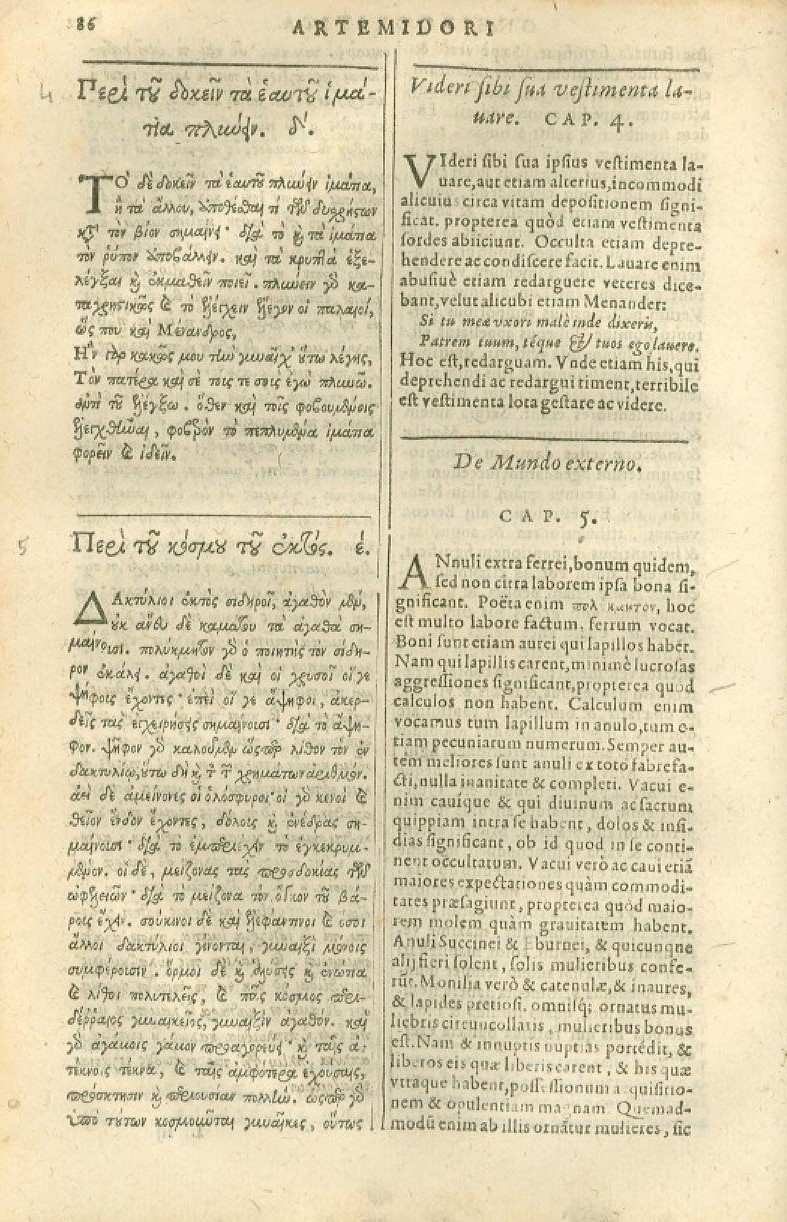
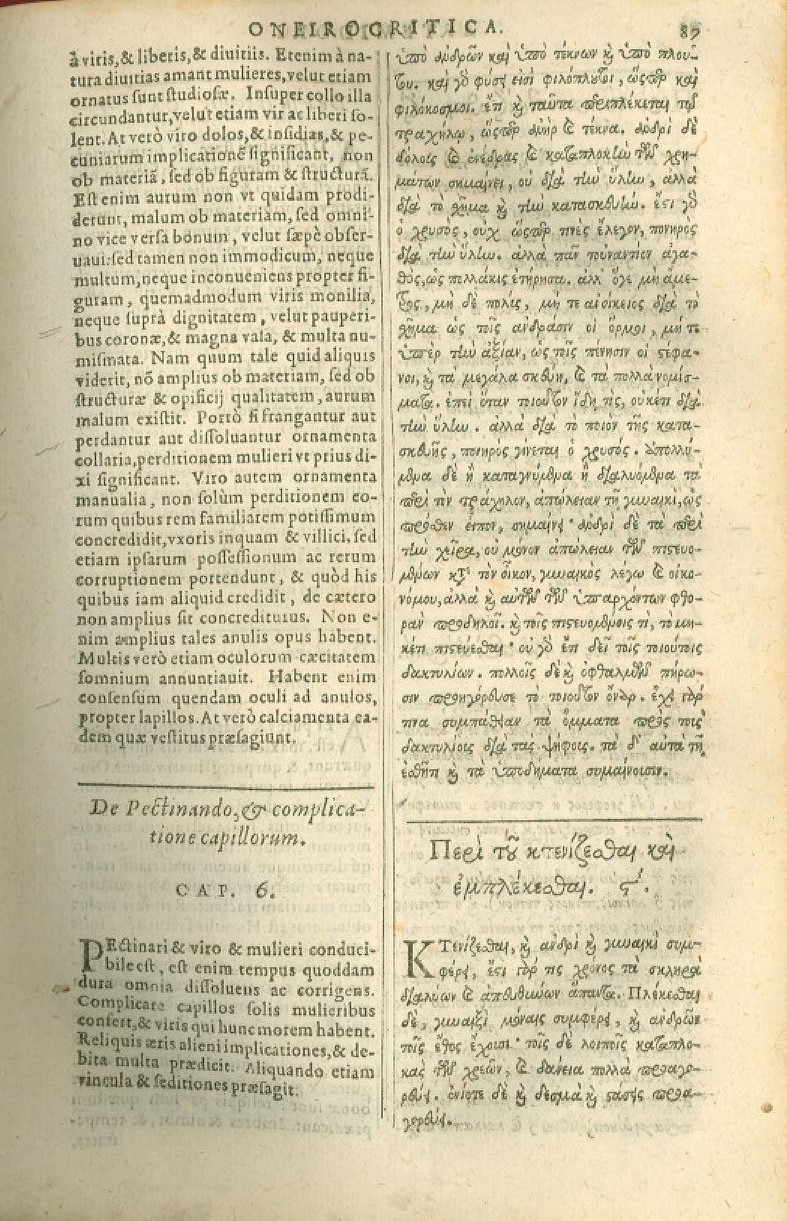
Rings made of iron are good, but they signify that the good things will not come without toil. For in fact the poet calls iron “wrought with much toil”. And golden ones that have precious stones are good since those without precious stones signify undertakings that are without profit due to the their lack of a stone. For we call the stone wich is on 〈the〉 ring the psephos, and we call a sum of money the same thing. And there is, moreover, always a need amongst men of this sort for rings. And, for most, rings made of solid beaten metal are always better. For hollow ones and those that contain brimstone inside signify plots and ambushes because they encompass something hidden, or expectations greater than the actual benefits due to their having a greater bulk than their weight.
And those made of amber and ivory and other rings of this sort are beneficial to women alone. And necklaces and chains and earrings and costly gems and every feminine adornment that is passed round the neck is good for women. For in fact it foretells marriage for the unmarried and children for the childless, and, for those who have both, great aquisition and abundance. For just as women are adorned by these objects, thus will they also be adorned by husbands and by children and by wealth (for, in fact, they are by nature fond of wealth, just as they are also fond of adornment). And, moreover, these items embrace the neck, just as both a husband and children do.
And for a man it signifies plots and ambushes and a great complication of affairs, not due to the material but due to their form and construction. For the gold is not, as some have said, grievous due to its material but, quite conversely, is good, as I have often observed, so long as it is not made in a manner that lacks proportion or is excessively bulky or out of place due to its form, as would be the case with necklaces for men, or in a manner that exceeds one’s status, such as wreaths and grand adornments and many coins for poor men. For, whenever one should observe a thing of this sort, the gold becomes grievous not due to the material but due to the nature of its preparation.
And objects that have been lost or broken or split in two, for a woman, should they go around her neck, signify the destruction of the things I mentioned above. But, for a man, objects that go around the hand not only reveal the destruction of the trusted members of his house – I mean his wife and manager of the house – but also the diminution of his stores and, for those who are trusted, non longer being trusted. For in fact there is no need among such men for rings. And for many a dream of this sort foretells blindness. For the eyes hold a certain sympathy with rings due to their “gems”. And shoes signify the same things as clothing.
Homepage: Hellenistic Art, Barberini Faun (detail), ca. 220 B.C., 19th-century plaster cast, Moscow, Pushkin Museum (Sofia Bagdasarova/Wikimedia).
Below: Reproduction of pages 86–87 from the Greek and Latin edition of Artemidorus’s "Oneirocritica", edited by Nicolas Rigault, printed by Marc Orry, Paris 1603 (www.archive.org).